Floral Corners 6: A Designer's Real-World Review
As a designer who has spent years curating embroidery files for both personal joy and commercial viability, I approach every new asset with a critical eye. The market is flooded with generic patterns, so finding a piece that truly elevates a project requires looking past the preview image. When I first opened the file for Floral Corners 6, I was immediately struck by its potential to transform simple textiles into curated boutique items. This isn't just another pattern; it feels like a deliberate design choice meant to frame your work.
The First Impression: Mood and Composition
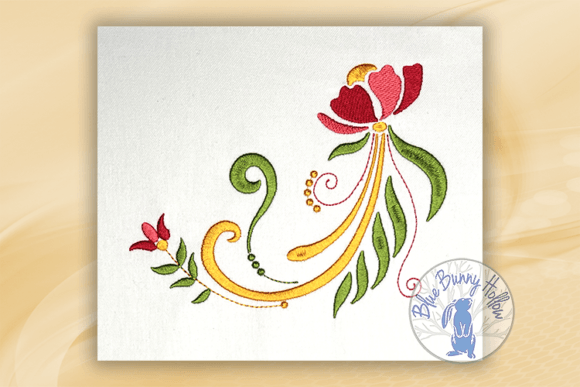
Stepping into Blue Bunny Hollow’s garden of Floral Corners, the immediate visual impact is one of understated elegance. Unlike busy, all-over prints that can overwhelm a garment, this design respects negative space. It creates a mood that is simultaneously vintage and modern, perfect for the current trend of "quiet luxury" in handmade goods. The layout is specifically engineered to sit comfortably in the corners of a square or rectangular canvas. Whether you are envisioning a cozy kitchen towel or a structured jacket, the shape suggests stability and balance.
From a technical standpoint, the composition relies heavily on the interplay between fill stitch and delicate outlines. It avoids the trap of being too dense, which is a common issue with corner designs that often bunch up near the hem. Instead, the elements flow outward from the corner point, creating a natural visual anchor. This makes it an excellent candidate for custom apparel where you want to add a touch of personality without altering the silhouette of the base item.
A Practical Scenario: The Boutique Tote Bag Project
To truly understand how Floral Corners 6 performs, let’s walk through a real-life scenario. Imagine you are preparing a line of organic cotton tote bags for an upcoming craft fair or Etsy listing. You have high-quality, unbleached canvas, but the plain white bags feel a bit stark. You need a design that signals quality craftsmanship.
I placed the machine embroidery design on the bottom corners of the tote bag mockup. The result was instant transformation. The floral motif softened the rigid lines of the bag while adding a layer of sophistication that a screen print simply cannot achieve. Because the design sits in the corner, it remains visible even when the bag is partially full, yet it doesn't interfere with the main carrying area. For a small shop product, this kind of subtle branding builds customer trust. It tells the buyer that attention was paid to detail, increasing the perceived value of the finished product significantly.
If you were to use this for sweatshirt embroidery, perhaps on the lower hem of a crewneck, the effect would be equally striking. It turns a basic hoodie into a statement piece suitable for holiday gifts or personalized presents. The key here is placement; because Floral Corners 6 is designed as a corner element, it guides the eye naturally around the garment, making the stitching look intentional rather than random.
Navigating Fabric Challenges and Stitch Density
While the aesthetic appeal is strong, a professional review must address the practicalities of execution. Not every fabric plays nice with intricate corner work. If you plan to use this on textured fabrics like heavy linen or fleece, you must test the design on scrap material first. Textured surfaces can sometimes cause running stitch details to get lost or appear uneven if the stabilizer isn't robust enough.
Thin or stretchy fabrics present another challenge. When working with silk or jersey knit, the tension required to pull the thread through the corner points can cause puckering. In these cases, using a cut-away stabilizer is non-negotiable. You also need to consider the hoop size. While the design is modular, ensure your hoop is large enough to capture the full sweep of the floral elements without distorting the outer petals. If the hoop is too small, the design may look cramped, ruining the elegant flow intended by the creator.
For dark fabrics, the default thread colors might not offer sufficient contrast. I always recommend testing the design in black and white mockups before committing to expensive threads. If the original palette is light, you may need to adjust the colorway to ensure the fill stitch pops against a navy or charcoal background. This step is crucial for maintaining the clarity of the design and ensuring the final look meets professional standards.
Scaling Up: From Single Piece to Quilt Block
One of the most exciting aspects of Floral Corners 6 is its versatility beyond single accents. As the description notes, it is magnificent if you repeat the design for a frame or quilt block. This opens up a world of possibilities for larger projects. Imagine creating a custom quilt for a nursery or a wedding gift. By mirroring the design on all four corners of a square block, you create a cohesive border that ties the entire piece together.
This repetition strategy is particularly effective for commercial embroidery projects where consistency is key. If you are selling pillow covers or placemats, using the same corner motif across a collection creates brand recognition. Customers begin to associate that specific floral style with your shop, fostering loyalty. However, when repeating the design, pay close attention to the alignment. Even a slight shift in registration can make the frame look uneven. Take the time to mark your fabric precisely before hooping.
Essential Notes for the Serious Maker
- Test Stitches First: Always run a test on a similar fabric to check for density issues, especially in the tightest parts of the corner.
- Stabilizer Selection: Do not skimp on backing. Corner designs pull fabric inward; a tear-away might not provide enough support for frequent washing.
- Licensing Check: Before selling any finished product or digital assets featuring this design, confirm the license terms. Some digital embroidery files allow for personal use only, while others permit limited commercial sales.
- Color Contrast: Review the thread colors against your fabric swatch. What looks good on a screen may look muddy in reality.
- Hoop Alignment: Use tape or markings to ensure the corner aligns perfectly with the edge of your fabric.
Final Verdict: A Versatile Asset for Your Toolkit
In conclusion, Floral Corners 6 stands out as a highly functional and aesthetically pleasing addition to any designer's library. It bridges the gap between simple decoration and sophisticated design, making it ideal for everything from baby embroidery on onesies to high-end personalized gifts. Its ability to enhance a product without overwhelming it makes it a safe bet for entrepreneurs looking to expand their catalog with minimal risk.
Whether you are an Etsy seller looking to refresh your listings or a hobbyist wanting to elevate your next sewing project, this design offers a reliable way to add a professional touch. Just remember to respect the mechanics of embroidery—test your stabilizers, check your densities, and choose your fabrics wisely. When executed correctly, Floral Corners 6 will undoubtedly become a favorite in your portfolio, turning ordinary items into cherished keepsakes.